
Apni sehat ko samjhein, 15 din mein.
Pakistan’s first continuous glucose monitor paired with a qualified diabetes reversal team.
Introductory price
Rs 17,000Rs 12,500all inclusive
You save Rs 4,500
Write “CGM” and our team will guide you.
Next time when you are going out, try this:
You have eaten these your whole life. You have never once seen what they actually do to your blood sugar.
Our care team will not tell you to stop eating them. They will show you how to reduce the impact.
Same food. Same portion. A Jeetay Raho care team strategy.
Factual data extracted from a patient’s CGM report.
Right now you only find out your sugar is high when you prick your finger. By then the meal was hours ago, and you have no idea which part of it did the damage.
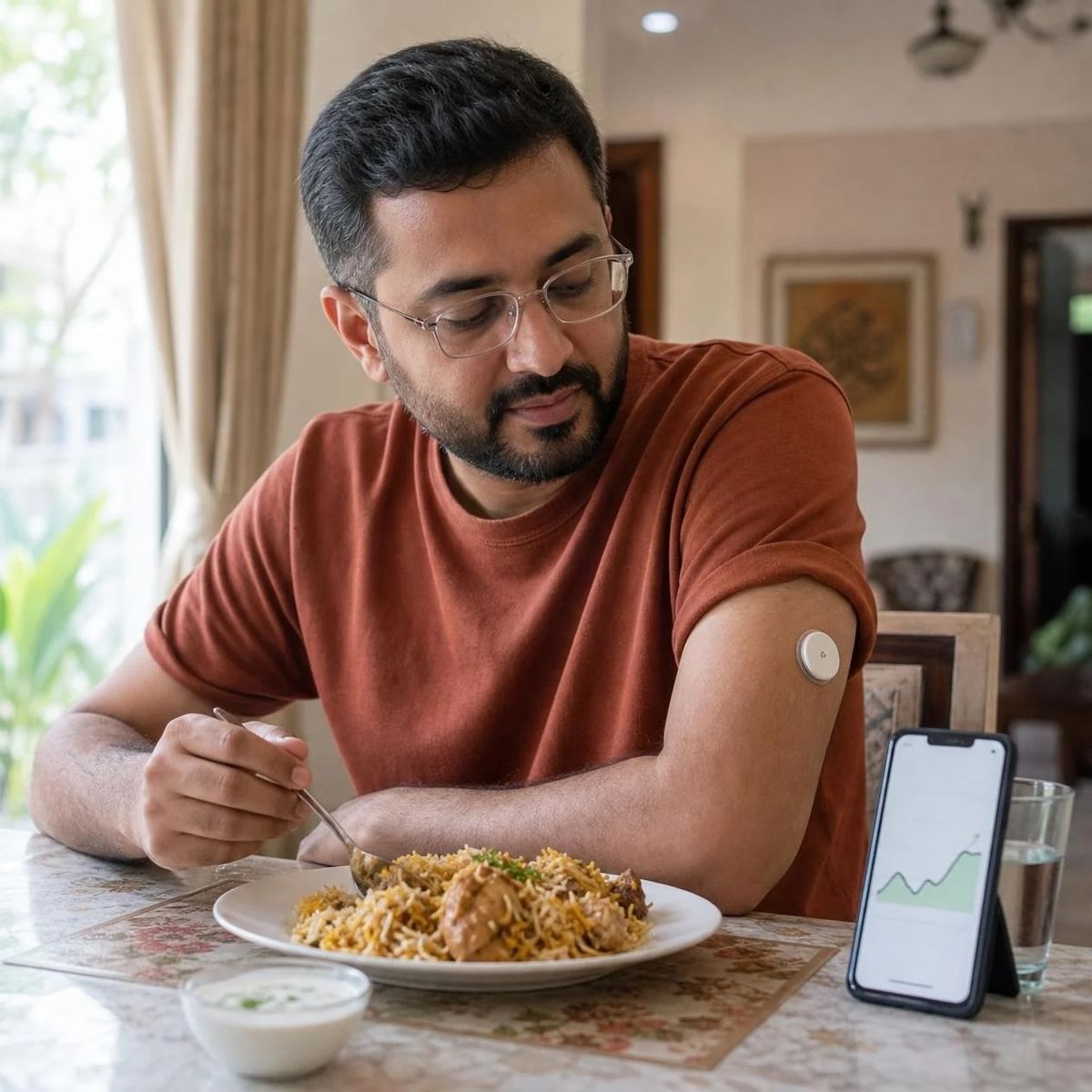
A CGM reads you every three minutes, day and night, for 15 days. You see a food push your sugar up while it is happening.
In two weeks you know what suits you and what does not. Maybe the pizza is fine. But the biryani portion needs controlling.
It is not only food. Because the sensor reads you day and night, you also see how a short night’s sleep or a stressful day pushes your sugar up, and your report points these patterns out.
One member’s CGM data, after guidance from our diabetes reversal trained care team.
Factual data extracted from a patient’s CGM report.
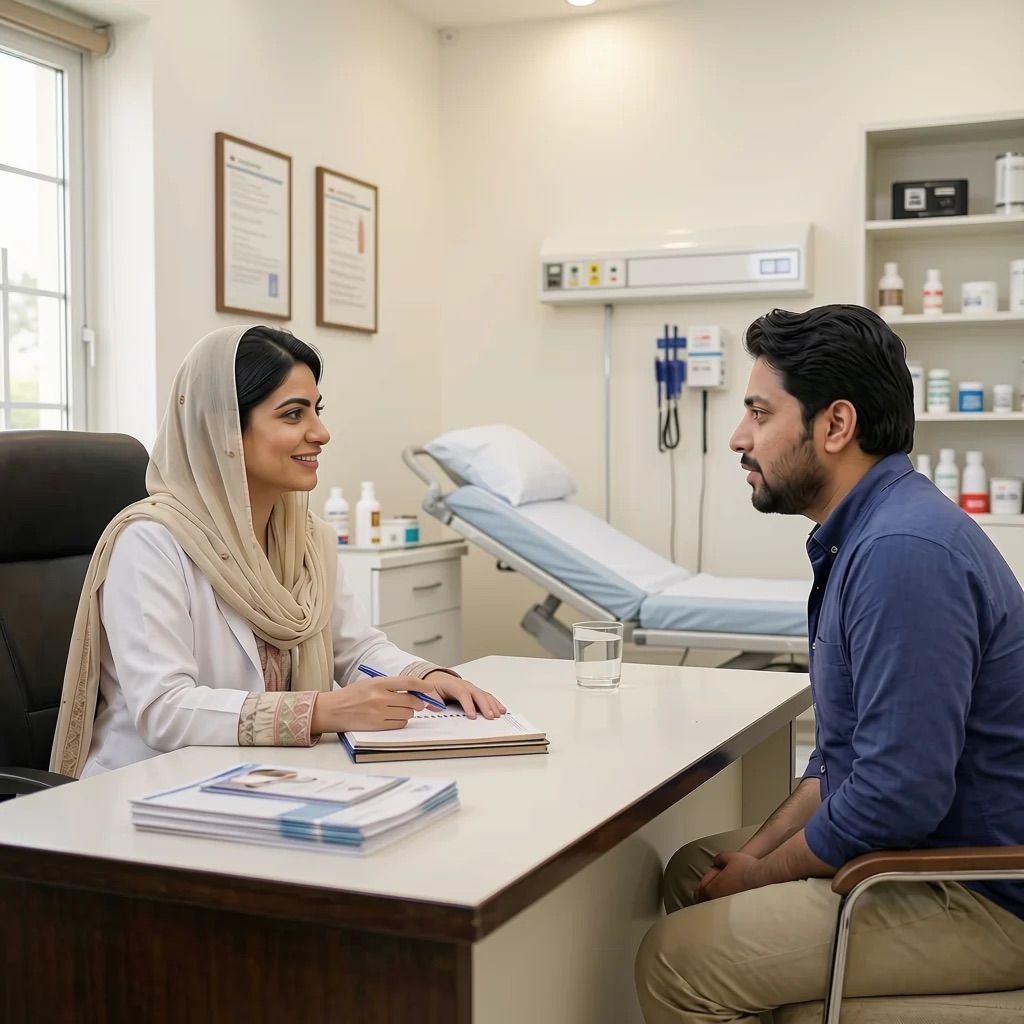
Step one, before the sensor goes on
This happens before your CGM starts, not after. Your nutritionist needs to understand how you actually live before the data starts coming in.
By the time the sensor goes on, you already know what you are looking for.
Your coach watches your readings. When your sugar spikes, she reaches you before you reach her.
All of it inside the Jeetay Raho app, alongside your live trends and your meal log.
Free on Android and iPhone.
After 15 days you have more than 7,000 readings. We turn them into something you can actually read. Not a template. Your food, your days, your numbers.
| What happened | Why it happened | What to do next time |
|---|---|---|
| 265 mg/dL in the evening. It took 2 hours 40 minutes to come back down. | Carbs had been building all day: coffee, bakery items, cheese sticks. Then keema at dinner. The last thing you ate was not the cause. The whole day was. | Never pair bakery items with sweetened coffee. If you are having them, have them with protein, and earlier in the day. |
Example taken from a real member report.
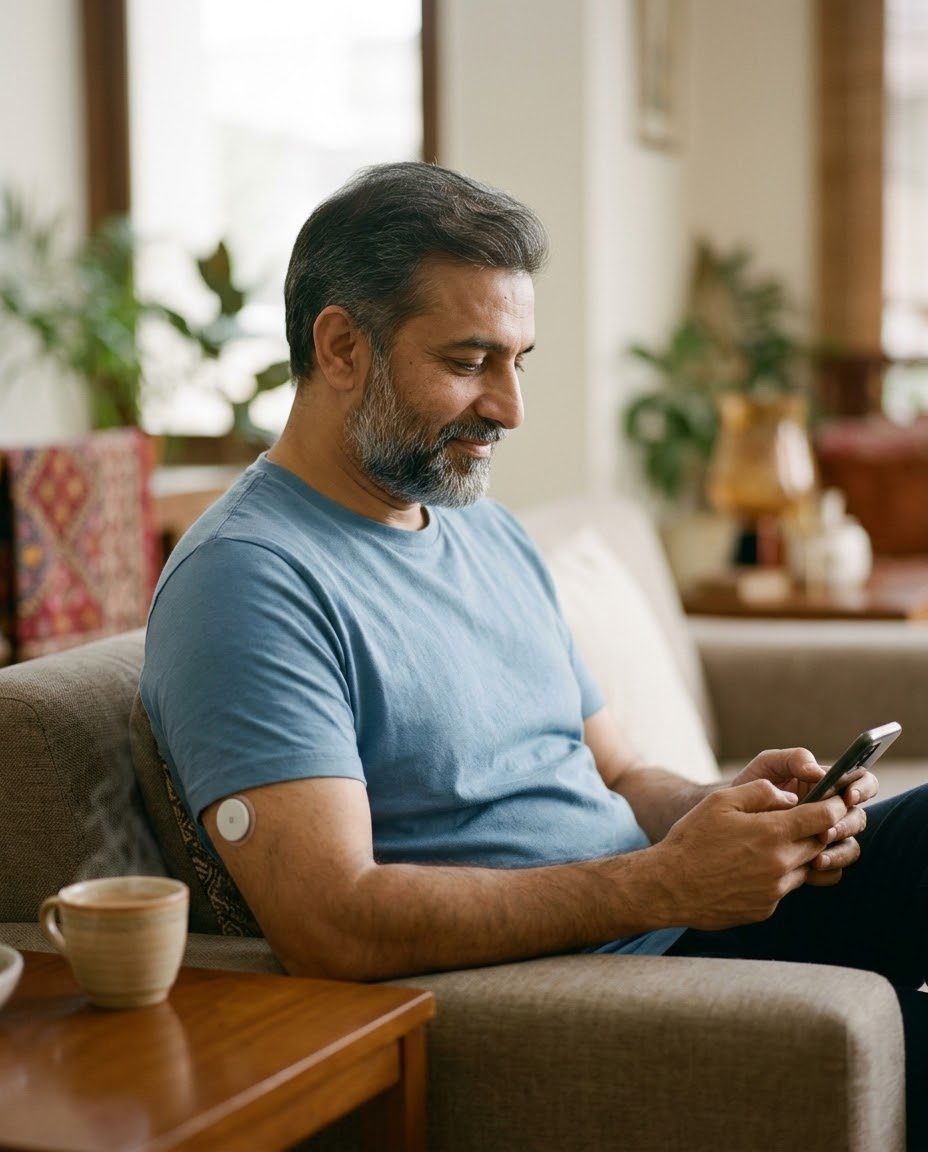
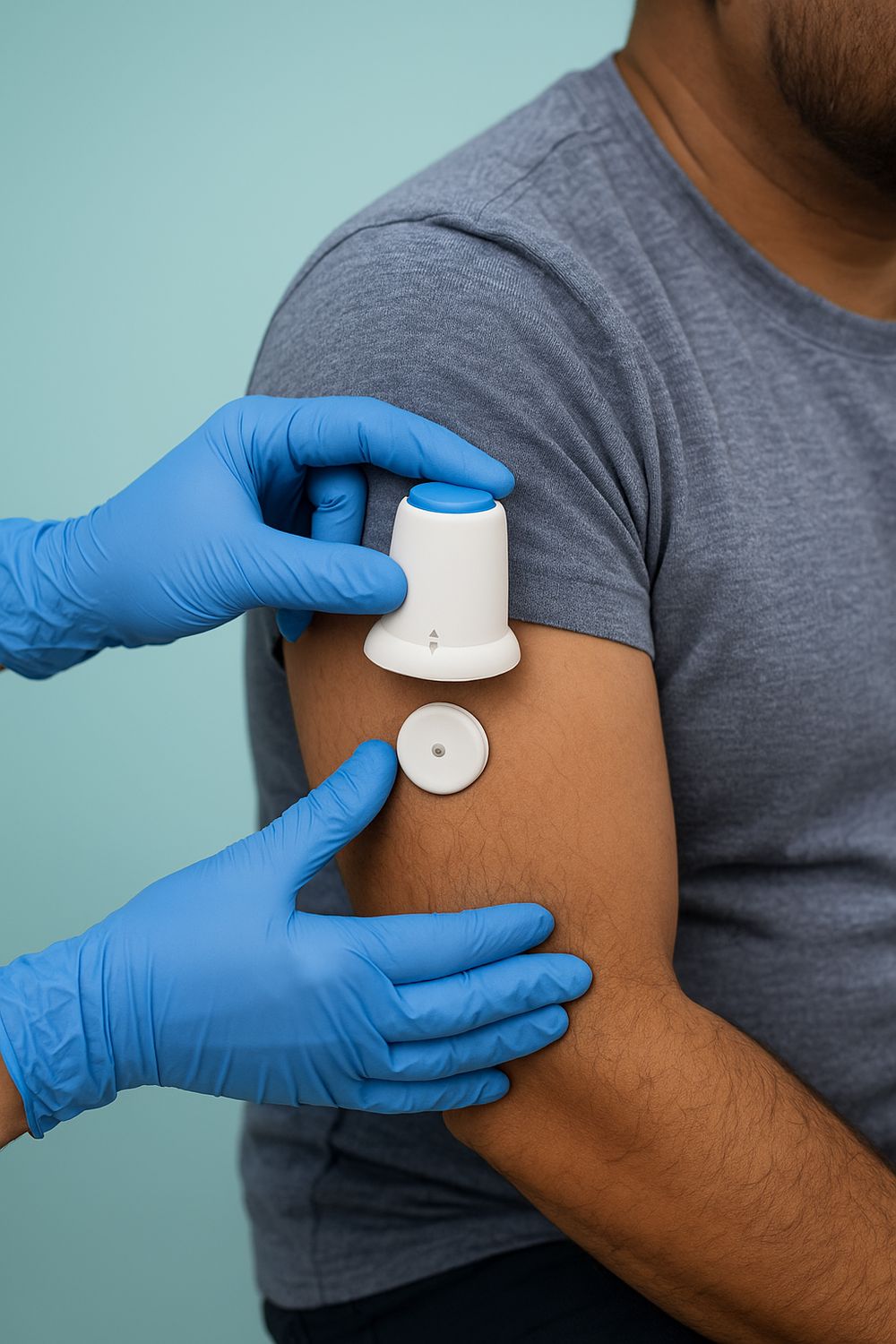
A continuous glucose monitor is a small sensor worn on the back of your upper arm. It measures your glucose every 3 minutes, day and night, and sends the readings to your phone, so you can see how food, sleep and activity change your blood sugar without pricking your finger. Jeetay Raho uses the iCan i3 CGM, which lasts 15 days and is DRAP approved in Pakistan.
No. Applying the sensor takes about a second and most people feel nothing at all. A very thin, soft filament sits just under the skin. It is not like an injection needle, and it does not hurt as much as a needle prick. And for the full 15 days, not a single finger prick.
Yes. The sensor is IP28 rated. Shower, wudu, rain and gym sweat make no difference. Prayer and sujood are unaffected. It sits on the back of the upper arm and stays hidden under your clothes.
The iCan i3 has a MARD of 8.71%, which is strong accuracy by international standards. A CGM and a glucometer will not show the same number, and that is normal. A glucometer reads blood; a CGM reads the fluid just under the skin. A CGM reading usually trails a glucometer by about 10 minutes, and a difference of up to 20% between the two is acceptable, with both still accurate. The real strength of a CGM is the trend, not the single number. If you want to compare, do it at least 24 hours after applying the sensor, and only when the graph is stable.
No. Some CGM sensors are affected by paracetamol or vitamin C. The iCan i3 is not. Carry on with your normal medication.
You get your personalised CGM Intelligence Report, and it stays with you: your spike foods, your safe foods, and what to do next. A first CGM gives you roughly 90% of your metabolic picture. Many people work on the plan for a few weeks, then wear a second sensor to see how much has changed. That is entirely your choice. There is no subscription.
Yes. Stress hormones and poor sleep can raise blood sugar even when you have not eaten anything different. Because the sensor reads day and night, you can see these patterns, for example higher morning readings after a short night. Your care team points them out in your report.
One iCan i3 sensor for 15 days, delivery within 24 hours, a comprehensive nutrition appointment before you start, a 15 day personalised nutrition plan, 15 days of continuous support based on your CGM trends, and your personalised CGM Intelligence Report. No hidden charges. Rs 12,500 is an introductory price; the regular price is Rs 17,000.
15 days. Introductory price Rs 12,500 Rs 17,000. Everything you eat, finally explained.
Or message +92 309 7158885 with “CGM”
The Jeetay Raho CGM program helps you understand the relationship between what you eat and your blood sugar. It is not a substitute for your doctor’s advice, prescribed monitoring, or medication. Never change your medication or insulin dose without asking your doctor first.
Medical content reviewed by the Jeetay Raho clinical team.